

How the RISE Method Supports Fertility Burnout Before IVF
By Margaret Cali, Fertility & Mindset Coach
Most women don’t enter IVF feeling calm or resourced.
They arrive already carrying years of pressure, loss, decision fatigue, and silent fear.
By the time IVF becomes an option, fertility burnout is often already present.
Not because they’ve done anything wrong.
But because prolonged uncertainty, repeated disappointment, and sustained emotional load take a toll on the nervous system, identity, and sense of self.
This is where emotional readiness matters.
Fertility Burnout Doesn’t Disappear When IVF Begins
Many women assume IVF will bring relief.
A plan. A timeline. A sense of control.
Many women enter IVF medically prepared but emotionally depleted, as fertility treatment often focuses on protocols rather than emotional readiness, even within leading providers such as IVF Australia.
But for women already in fertility burnout, IVF can amplify what is already strained:
• A nervous system stuck in fight-or-flight
• A body that feels unsafe or untrustworthy
• A mind constantly scanning for threat or failure
• A deep fear of “I can’t go through this again”
Without emotional preparation, IVF often becomes something women endure rather than experience with steadiness and agency.
Why Emotional Support Needs Structure
Support alone is not enough.
Many women have supportive partners, kind doctors, and well-meaning friends — yet still feel alone.
What’s missing is structure.
Structure helps the nervous system settle.
Structure reduces decision fatigue.
Structure creates emotional containment when uncertainty is unavoidable.
This is the gap the RISE Method was created to fill.
What the RISE Method Addresses
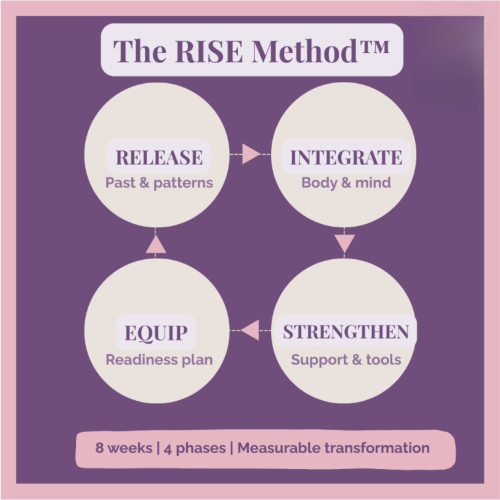
The RISE Method is an emotional preparation framework designed to support women before IVF begins — when burnout is present, but often unspoken.
It focuses on four core phases:
Release
Letting go of accumulated pressure, self-blame, and emotional suppression.
This phase supports nervous system regulation and reduces survival-mode functioning.
Integrate
Processing grief, fear, and hope together — rather than oscillating between numbness and overwhelm.
This phase restores emotional coherence and internal steadiness.
Strengthen
Rebuilding self-trust, body partnership, and emotional resilience.
This phase helps women feel more capable of meeting what IVF asks of them.
Equip
Developing practical emotional tools for decision-making, boundaries, communication, and both-outcomes preparation.
This phase supports women to enter IVF feeling prepared, not desperate.
What Changes When Burnout Is Addressed Before IVF
When fertility burnout is supported emotionally before treatment begins, women often report:
• Clearer thinking and decision-making
• Reduced anxiety and emotional reactivity
• A calmer relationship with their body
• Greater emotional steadiness during appointments and waiting periods
• Stronger communication with partners and support systems
This does not promise outcomes.
It protects wellbeing, identity, and emotional integrity — regardless of outcome.
Emotional Readiness Is Not a Luxury
IVF places real demands on the nervous system, relationships, and sense of self.
Preparing emotionally is not about “positive thinking” or trying harder.
It is about entering treatment resourced rather than depleted.
Just as clinics prepare the body medically, emotional readiness prepares the woman.
Where This Fits in the Bigger Picture
If you’re recognising signs of fertility burnout in yourself, you may wish to start with understanding the burnout cycle itself.
You may also find it helpful to explore how fertility burnout leads to emotional shutdown, or how it impacts relationships over time.
Emotional support is not an optional extra in fertility care.
It is part of doing this well.
With gentle support,
Margaret Cali
Fertility & Mindset Coach







Leave a Reply
Want to join the discussion?Feel free to contribute!